Voice companionship for dementia families
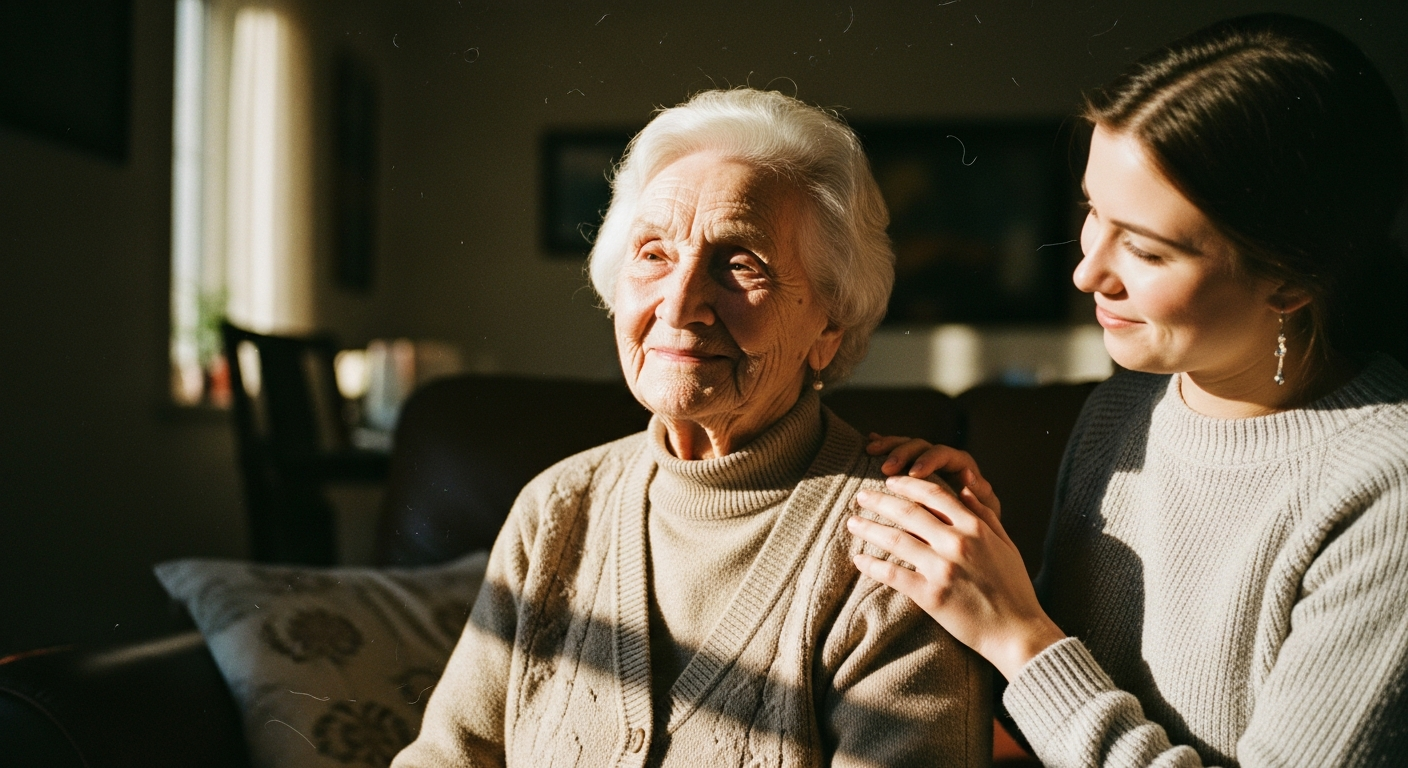
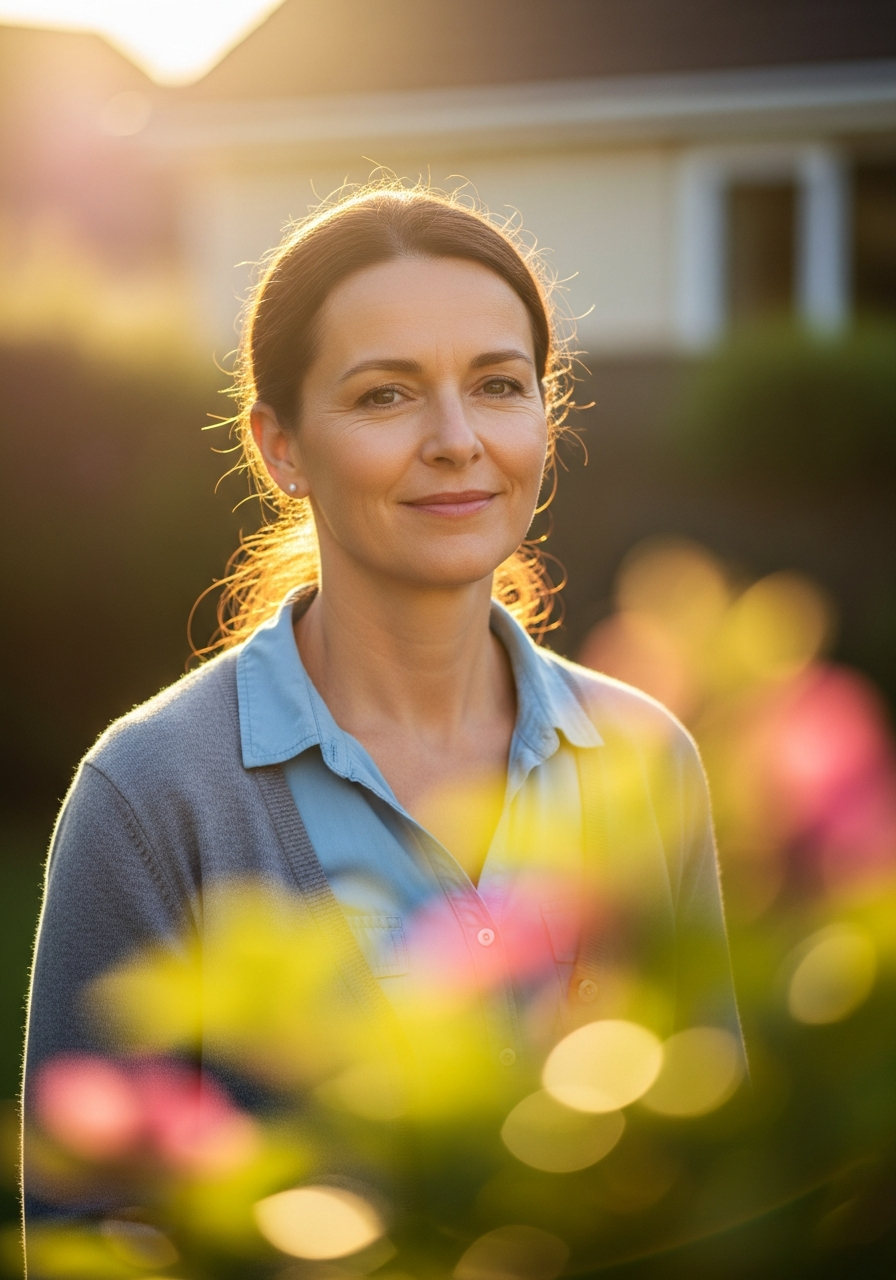
Caregiver with parent

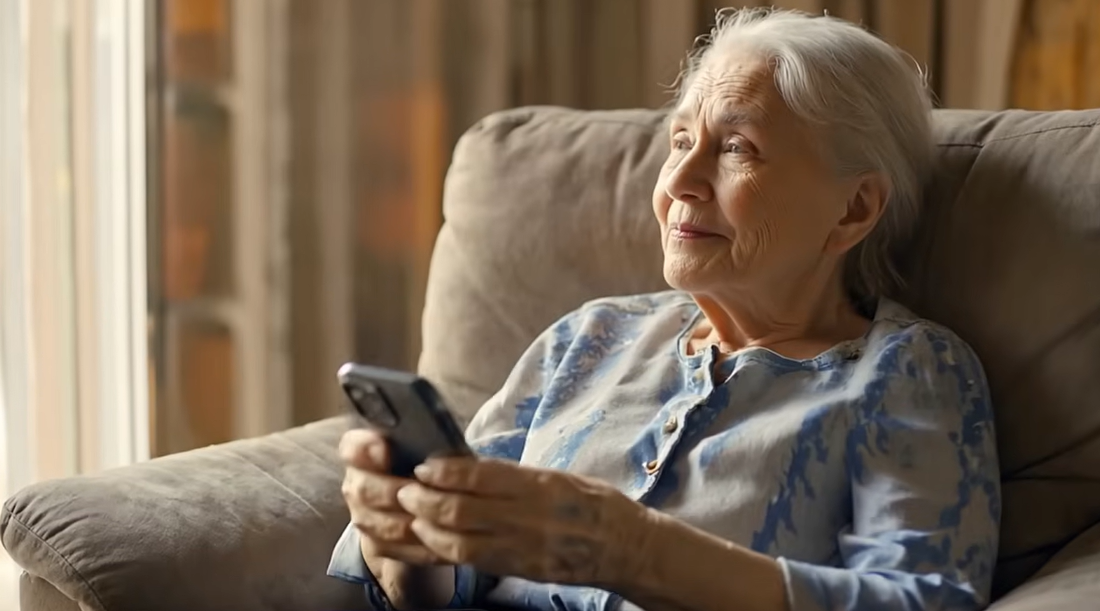
They call because they love you.

Ten times yesterday. Eleven the day before. From the shower. From meetings. From the edge of sleep.

And the calls you couldn't answer, those are the ones you carried.

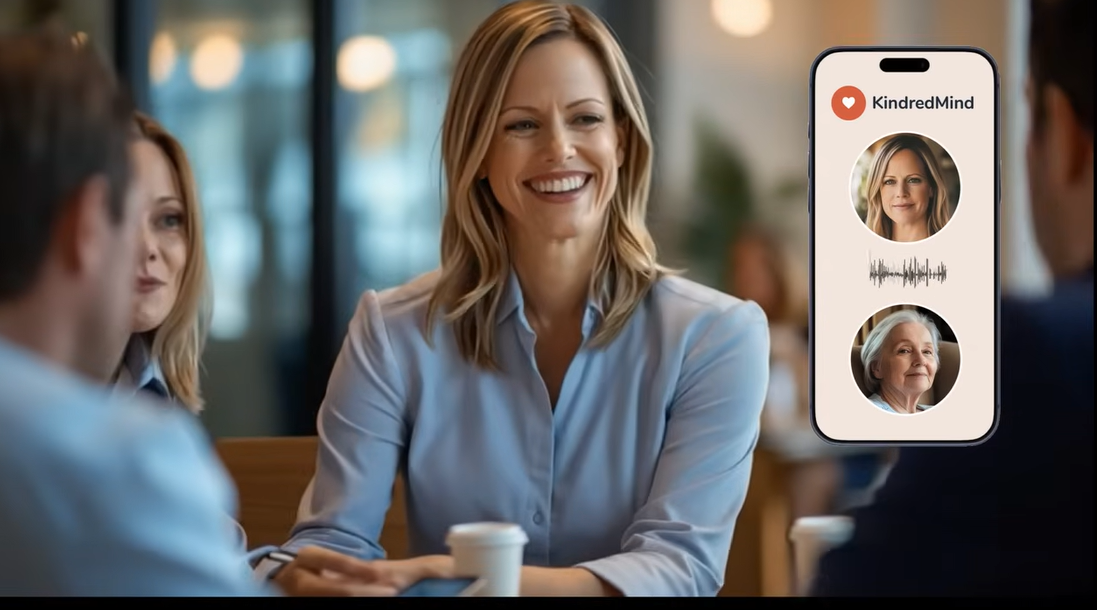
KindredMind answers those calls in your voice, using dementia care communication techniques trained professionals rely on.

So when you can't answer, every call is handled with calm and care.

You set it up. You stay in control. You don't have to carry it alone.

Takes about 30 minutes to set up. 30-day money-back guarantee. Cancel anytime.

Alzheimer Society of Canada — every call follows their published dementia communication guidelines

Takes about 30 minutes to set up. 30-day money-back guarantee. Cancel anytime.

Clinical Care Standard Follows Alzheimer Society of Canada guidelines · Simulated Presence Therapy · Explicit caregiver consent required

Trusted by families navigating dementia across Canada, the U.S., and around the world.

Canadian maple leaf
Built in Canada by a caregiver
Follows dementia care communication standards
Privacy-first. AES-256 encrypted.
Your data is never sold.
Clinical Care Standard
Every call follows clinical memory care standards.
Alzheimer Society of Canada Every call follows their published dementia communication guidelines.
Validation Therapy Protocol Never corrects, never reorients. The clinical standard in memory care since 1963.
Informed Consent Framework Family-authorized, caregiver-controlled. Your voice model requires explicit recorded consent.

You can't answer every call.
Now you answer every time.

A calm, familiar response every time they call.

The Call
They call you.
Just like they always do.
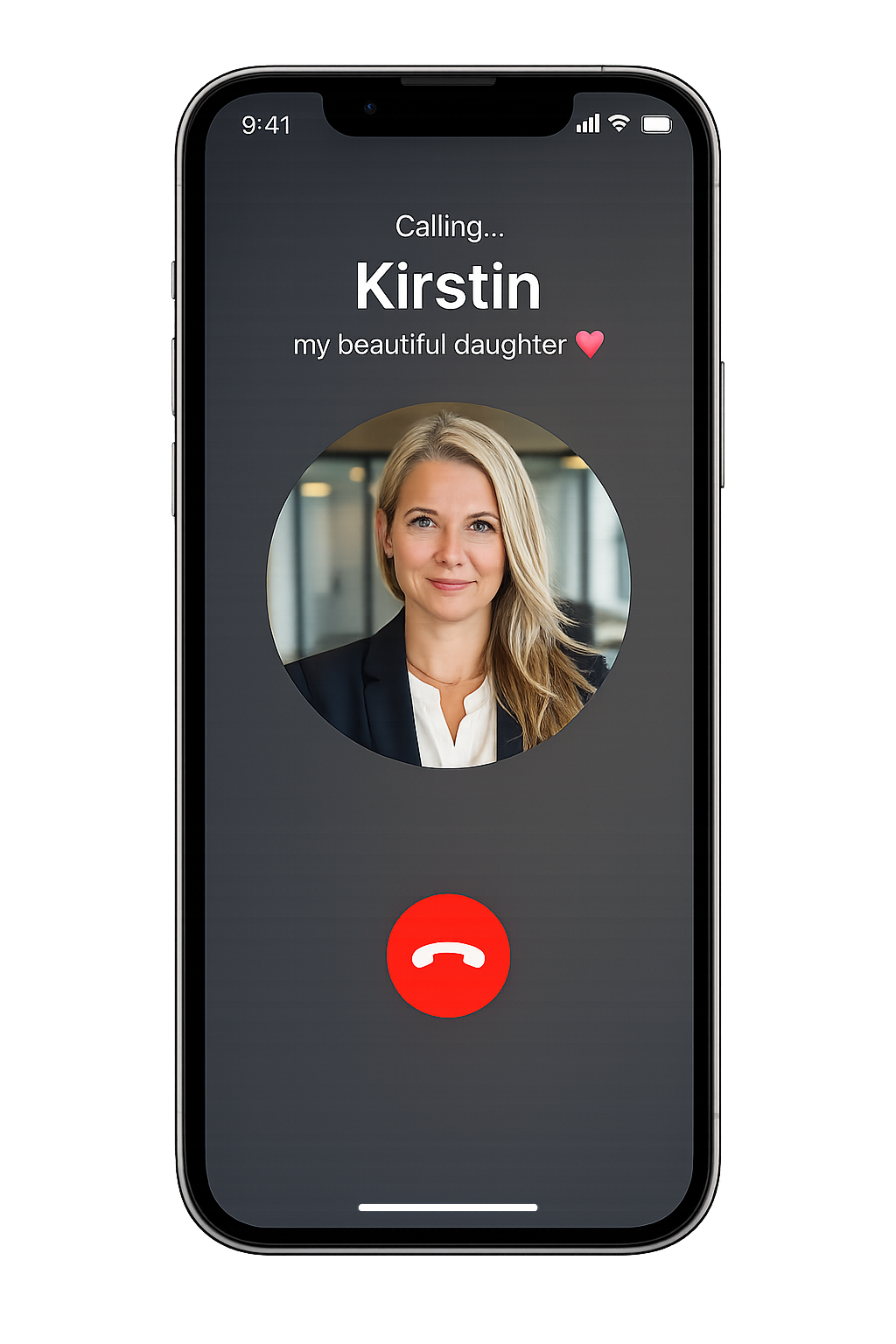
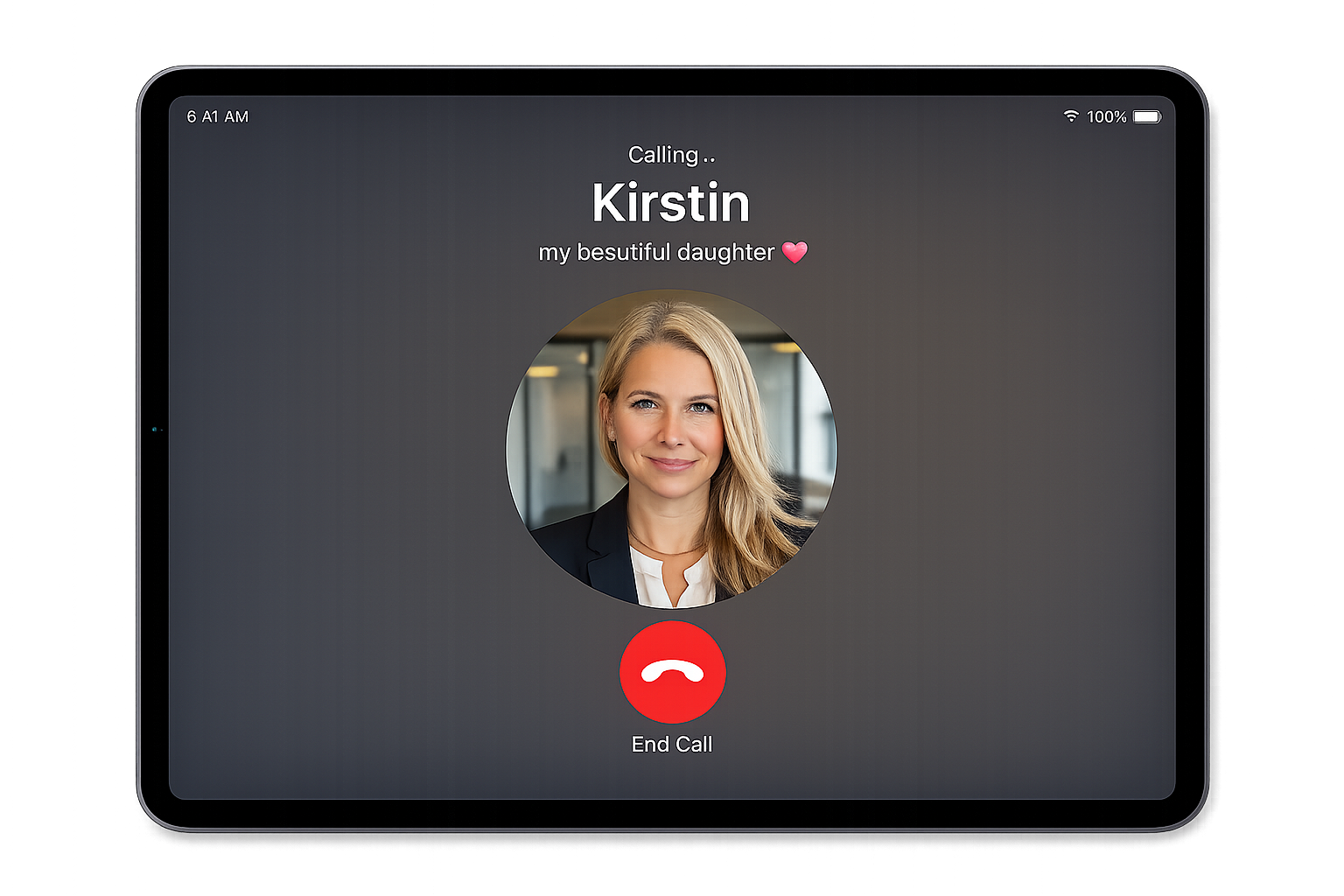
The number saved in their phone. Your name. Their familiar way of saying I love you.
The Answer
KindredMind answers in your voice.
Calm, patient, and grounded in what they know. Their routines, their memories, their stories.
Built from the profile you create and the guidance you provide.
The Feeling
They feel heard.
The worry eases.
A real conversation. Warmth instead of silence. Comfort instead of confusion.
You Stay Present
Even when you can't pick up.
Review every conversation. Schedule a daily check-in. Step in anytime.

Every response is shaped by your voice and how you would respond.

From a family like yours

I try to see my mom daily. That will never change.
But she calls in the in-between, and that's okay.
I just can't get to every call.

Before KindredMind, every missed call weighed on me.
Was she okay? Did she feel like I abandoned her?

KindredMind answers those calls now.
And because of that, when I walk through her door,
I'm not carrying the weight of every missed call.
I'm just her daughter. She deserves that version of me.


Kirstin Thomas, Co-founder & President of KindredMind  ·  Sharon's daughter

Read why we built this →

Here is what nobody tells you about loving someone with dementia, and what memory care professionals have quietly known for a very long time.

What caregivers carry,
and what the calls are really saying.

5 min
How quickly anxiety resets, they forget they called, and the fear returns
UCLA Health Dementia Care Program

28%
Of families using dementia phone tools cite repetitive calling as their number one problem
teleCalm customer research
9 hrs
Average hours of care given every single day, more demanding than caring for any other condition
Fisher et al., 2011 · Family Caregiver Alliance
17%
Of dementia caregivers quit their jobs, the calls don't just cost peace of mind, they cost careers
Alzheimer's Association Facts and Figures
$60B
Lost annually by US businesses to caregiver interruptions, absenteeism, and lost productivity
Alzheimer's Association
41%
Reduction in caregiver depression when regular supportive phone contact is provided, the phone call is not the problem. The unanswered one is.
Possin et al., JAMA Internal Medicine, 2019 · UCSF Memory and Aging Center

Sources: UCLA Health · teleCalm · Fisher et al. 2011 · Alzheimer's Association Facts and Figures 2024 · Possin et al., JAMA Internal Medicine 2019.

"The calls are not a burden. They are love expressed the only way their brain knows how right now."

It is not random. It is not manipulation. Dementia care professionals have a name for it, separation anxiety. Something triggers a moment of fear or loneliness and the only relief is the familiar voice of someone they love. This pattern is most common in mild to moderate dementia: when short-term memory has been affected but the ability to reach for the phone, to dial a familiar name, to hold a conversation, is still very much intact. They forget they called five minutes ago. The anxiety resets. The love resets. The call comes again.

UCLA Health describes it precisely: people living with dementia "will forget that they called before or asked the same questions even five minutes ago."¹ This is not a behaviour to be managed. It is a need to be met.

And here is the other side nobody says out loud. You cannot stop answering. Every unanswered call carries the same fear, what if this is the real one? So you pick up from the shower. From meetings. From dinner. From the edge of sleep. And on the days you block the number just to breathe, you spend the rest of the day feeling guilty about it. That guilt is one of the heaviest parts of loving someone with dementia. You shouldn't have to carry it.

¹ UCLA Health Alzheimer's and Dementia Care Program. uclahealth.org

"Every family eventually reaches the same impossible moment. Here is what most of them try, and what actually happens."

What families try first

Every one of these is understandable.
None of them solve the underlying problem.

Taking the phone away

It feels like the only way to get your life back. But the Alzheimer's Association describes the phone as a lifeline, "a way for family members to check on relatives who insist on living at home but need support."¹ Taking it away doesn't resolve the anxiety driving the calls. It removes the outlet while leaving the fear entirely intact.

Clinical ethics frameworks for dementia care operate on a foundational principle: least restrictive option. Removing the phone is the maximum intervention. Most families who remove the phone give it back within weeks. The guilt is worse than the calls.

¹ Alzheimer's Association · Philadelphia Inquirer, 2019

The anxiety escalates. The guilt compounds.
Blocking calls and quiet hours

Products exist that intercept calls during time windows you set and play a recorded redirect message. They reduce the number of calls that reach your phone. But UCLA Health explains the mechanism that makes this fail: "Because people with dementia are forgetful, they will forget that they called before or asked the same questions even five minutes ago."²

Blocking a call doesn't resolve the anxiety. It leaves a frightened person alone with an unanswered fear. The UCSF Memory and Aging Center confirms that people with dementia "may feel threatened and become agitated when their caregiver tries to ignore them."³ For many families, blocking makes the underlying anxiety worse over time.

² UCLA Health Dementia Care Program · ³ UCSF Memory and Aging Center

The symptom is managed. The cause is untouched.
Voicemail and not answering

The most common approach. And the most costly, not to your loved one, but to you. A 2024 review in the Journal of Neurology Research Reviews identifies guilt, grief, and emotional distress as the primary psychological factors affecting caregiver wellbeing. Higher guilt is directly associated with lower commitment to the caregiving role.

Meanwhile, from their perspective: an unanswered call doesn't leave them sad. It leaves them more frightened than before. The next call comes sooner and with greater urgency. The ignored call doesn't give you peace. It feeds the spiral.

Ramesh & Guruprasad, 2024 · Hernandez Chilatra et al., Sage Journals 2024

Worse for you. Worse for them.
Scheduled calls and routines

This is the most commonly recommended professional advice, and it genuinely works in early stages. Judy Cornish of the DAWN Method explains why: if you're reliably available, they may begin to internalize your presence and call less.

But as dementia progresses, the short-term memory that allows a person to hold onto "they're calling at 2pm" deteriorates. By the time most families find KindredMind, scheduled calls have already been tried earnestly and have failed. The calls at 2pm still happen. So do the ones at 7am, 11am, 4pm, and 11pm.

Judy Cornish, The DAWN Method · thedawnmethod.com

Works early. Stops working as the disease progresses.

"Every alternative manages the symptom, the call reaching your phone. KindredMind addresses the cause, the anxiety that drives it. The same cause every dementia care professional is trained to resolve."

Read the full clinical comparison of every alternative →

At a glance

How every approach compares

Every approach below has been tried by families who love their parent. Here is what the research shows about each one.

Approach Addresses anxiety cause Hears familiar voice Reduces caregiver guilt Works as dementia progresses
Taking phone away ✗ No ✗ No ✗ Worsens it N/A
Call blocking ✗ No ✗ No ✗ No ✗ Worsens over time
Voicemail ✗ No ✗ No ✗ Compounds guilt ✗ No
Not answering ✗ No ✗ No ✗ Worst outcome ✗ No
Answering every repeated call ~ Momentarily ~ Yes, but unsustainable ✗ Caregiver burnout ✗ Gets harder
Scheduled calls ~ Early stages only ~ Scheduled times ~ Partially ✗ Stops working
Medication ~ Suppresses symptoms ✗ No ~ Variable ~ With risks
KindredMind ✓ Yes, directly ✓ Every call ✓ Yes ✓ Mild to moderate (can use a phone)

Based on Alzheimer Society of Canada guidelines, UCLA Health Dementia Care Program, UCSF Memory and Aging Center, and peer-reviewed dementia caregiving research.

30 years of clinical research

The science behind every call KindredMind answers

Researchers have pointed to the answer for thirty years. KindredMind is the first tool built around the frequency of the need, not the frequency of the available resource.

Alzheimer Society of Canada

Published guidance on dementia-friendly communication confirms that warmth, patience, and reassurance, not literal accuracy, are the goals of every interaction with someone living with dementia. Meeting them where they are is not a workaround. It is the standard of care.

alzheimer.ca →
Cochrane Systematic Review, 2020

A peer-reviewed systematic review confirmed that simulated presence therapy, providing the comfort of a familiar voice to a person with dementia, is a recognised, evidence-based non-pharmacological approach to the behavioural and psychological symptoms of dementia.

KindredMind goes further. It doesn't play a recording. It responds, adapts, and genuinely knows them.

Abraha et al., PubMed 2020 →
UCSF Memory and Aging Center, 2019

A study published in JAMA Internal Medicine found that regular supportive phone contact reduced caregiver depression by 41%, and averted an estimated 120 emergency room visits. Their programme called caregivers monthly.

Your loved one doesn't call monthly. They call ten times before lunch. KindredMind answers every one.

Possin et al., JAMA Internal Medicine 2019 →
The question worth asking

"Is this a deception?"

No. What your loved one experiences is the recognised standard of care in dementia, the same approach every memory care professional is trained to deliver.

It is not a workaround. It is not a simulation. It is care, the same care a memory nurse delivers, in the voice your loved one has trusted their whole life.

Here is what every trained dementia care professional knows: for someone living with dementia, comfort is not a lie.

The Alzheimer Society of Canada's published guidance for dementia-friendly phone calls does not ask caregivers to always be literally accurate. It asks them to be warm, patient, and reassuring, to meet the person where they are. Every memory care professional is trained on this principle. When someone living with dementia asks where their mother is, the caring response is not "she passed away in 1987." The caring response meets them where they are. This is not deception. It is the recognised standard of care.

Researchers have studied the comfort of a familiar voice in dementia care since the 1990s. The practice, known as simulated presence therapy, was examined in a Cochrane systematic review in 2020 as a recognised non-pharmacological approach to the behavioural and psychological symptoms of dementia. KindredMind takes that foundation and goes further: it responds, it adapts, and it genuinely knows your loved one.

KindredMind is not set up by a company. It is set up by you. You record your voice. You build the knowledge base. You decide when it answers. Every voice model requires your explicit recorded consent, a real moment of permission, not a checkbox.

What your loved one experiences is not a trick. It is care, delivered in the voice they have always known, with the warmth only you can provide, at the moments you cannot be there yourself.

There is another word for what KindredMind does.

Care.

The same word the Alzheimer Society of Canada uses. The same word every memory care professional is trained to deliver. Not comfort as a workaround. Care as a standard.

Validation Therapy Meeting someone where they are emotionally, not correcting their reality. The clinical foundation of dementia care since 1963.
Simulated Presence Therapy Using a familiar voice to reduce anxiety in people with dementia. Recognised in the Cochrane systematic review as a non-pharmacological standard of care.
Person-Centred Communication The Alzheimer Society of Canada's published guidance: one topic at a time, generous processing time, warmth over accuracy. Every KindredMind call is built on this framework.

The anxiety driving those calls has one solution. Every dementia care professional knows what it is. It is not a quieter phone. It is the voice they love.

KindredMind makes that available every time they call.

Alzheimer Society of Canada · Cochrane Database Syst Rev 2020, Abraha et al. · UCLA Health · Alzheimer San Diego

Set it up once.
They always reach you.

Thirty minutes of setup, on your own or with us on a free call. They always hear your voice.

1

Record Your Voice

Spend fifteen minutes recording prompts in the app. We build an Instant Voice Clone right away (~72% accuracy). Only your voice is ever recorded, never your loved one's. KindredMind builds your voice from a simple script and/or a guided conversation with a team member who can help set everything up for you. From there, it continues to learn in the background from short, natural moments of your speech, no long recording sessions or extra work required. The system quietly refines your voice over time, becoming more accurate with each interaction and reaching ~90% fidelity. It keeps getting more like you without you doing a thing. Or skip the solo recording entirely. Book a free 30-minute setup call and we'll record your voice together, live, in a real conversation. Natural speech produces a richer voice model than scripted prompts alone.

2

Build Their World

Tell us everything about them. Their daily routine, their nurses' names, their favourite memories, what they look forward to on Fridays. The more you share the more every conversation feels like it could only ever be about them. On the setup call, we build this together. Most families leave the call with a knowledge base they couldn't have built alone, because the right questions surface details you didn't think to add.

3

Connect Their Phone

We give you a number, one that lives in their phone under your name. Just for them. When they call it, they hear your voice, your warmth, and the things only you would know. They get exactly what they are reaching for.

4

They Always Hear You

When you are sleeping, working, or just need a single uninterrupted hour, KindredMind answers. They hear warmth, patience, and the voice they love. You're able to stay focused and finish what's in front of you, with a gentle summary waiting whenever you are ready.

KindredMind's call behaviour is built directly on the Alzheimer Society of Canada's published guidance for dementia-friendly phone calls, one topic at a time, generous processing time, charitable interpretation of every word. alzheimer.ca →

See the full step-by-step breakdown of how KindredMind works →

Everything they need.
Everything you have been missing.

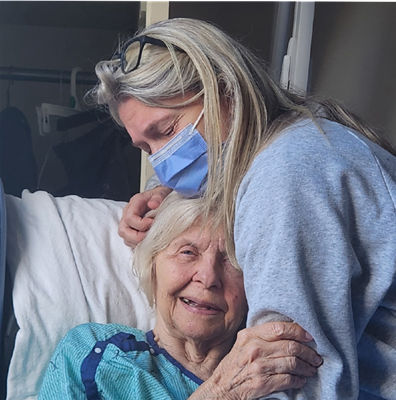
Kirstin and Sharon
Living Voice
The voice that grows
as the calls add up.

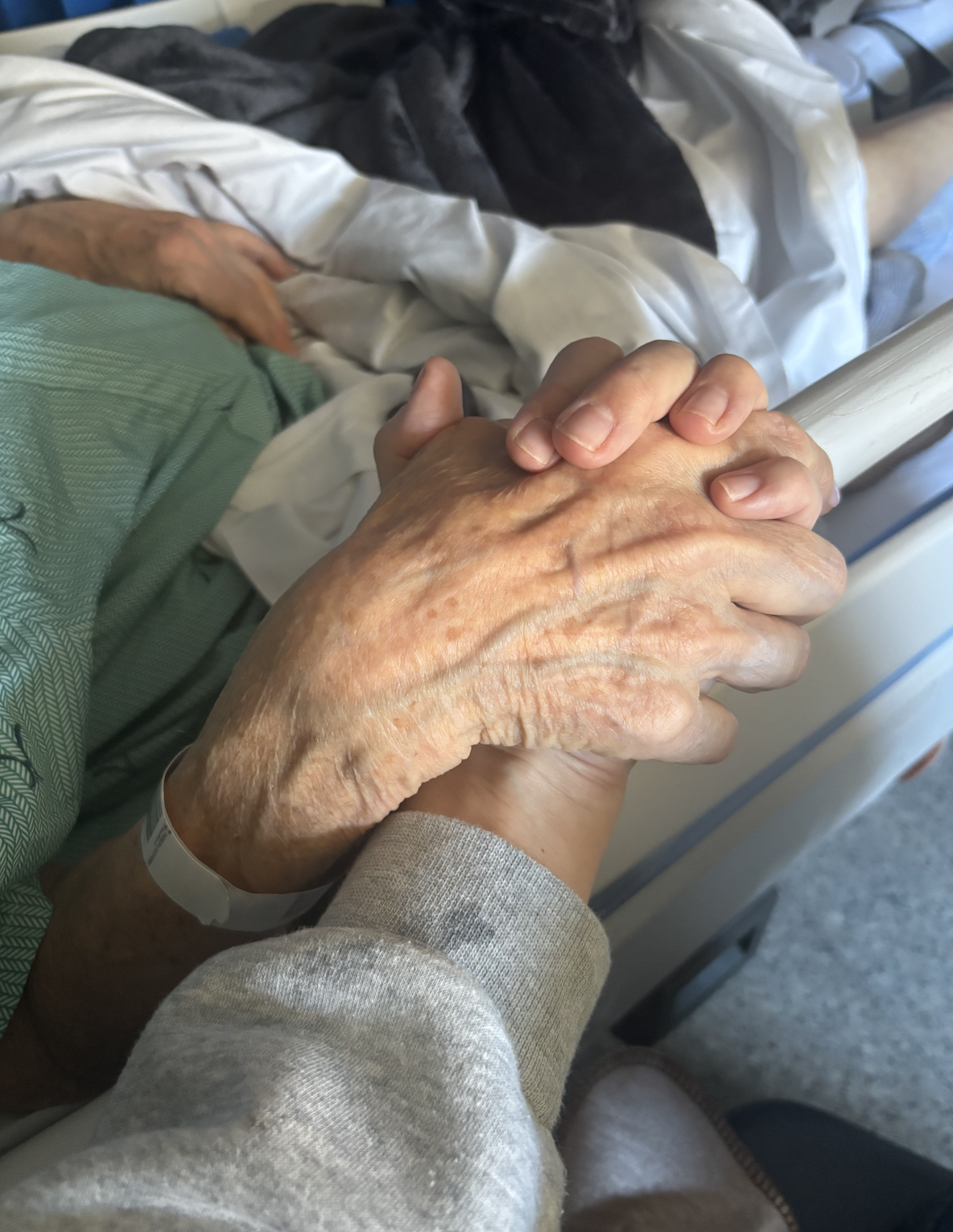
Sharon and Kirstin (KindredMind co-founder) in hospital after an ischemic stroke, November 2025

Thu, Mar 27 2:14 pm
AI Calm 4m 32s
Summary
Asked if you're coming Sunday and whether the kids will be there.
Mentioned the garden looking pretty after the rain. Calm and content.
No signs of distress. Ended the call warmly.
Follow-up note
She's hoping to hear about Sunday plans. Worth a quick text or a short real call to confirm.
Every call summarized
Stay close to
their world.
They always
get an answer.
Every call. Every time. Your voice. Their peace.
Living Voice
Instant Clone on Day 1. Auto-upgrades to Professional as calls accumulate. Every call makes it more like you.
Their World
Life story, family, nurses' names, dining companions. Every conversation draws on a rich, growing picture.
Daily Routine
Add their real schedule, breakfast, bingo, rest. Every conversation anchored to what is genuinely happening.
You Stay in Control
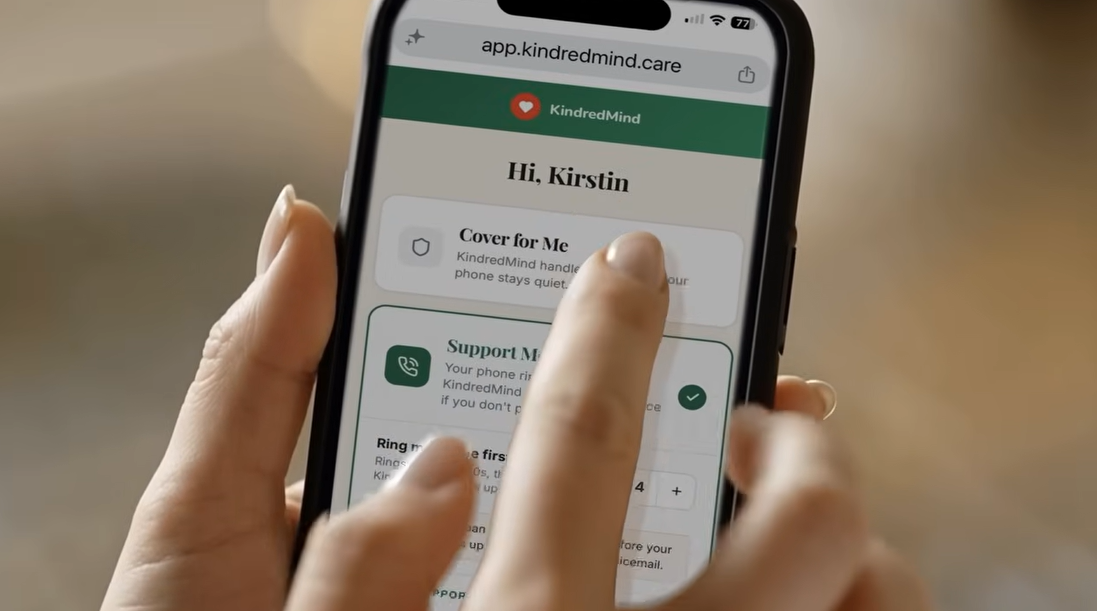
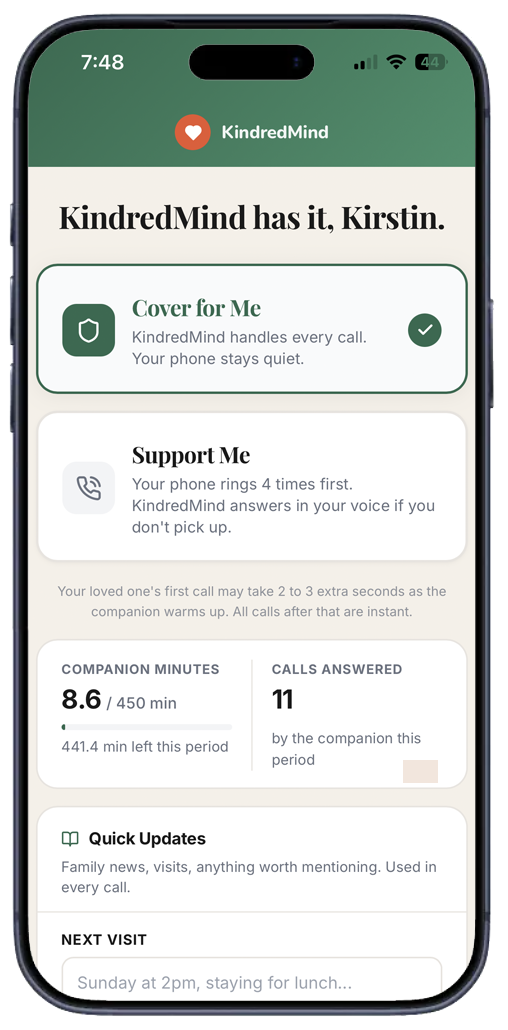
Toggle between modes in one tap. Monitor any live call silently. Read every summary at your own pace.
Silent Monitor & Barge In
Tap Monitor and your phone rings. Listen silently. Barge in when you're ready. No awkward handoff.
Auto-Schedule
Set your real weekly availability once. Calls automatically route based on your actual schedule.
Every Call Summarized
After each call: how they seemed, what they talked about, anything worth knowing.
Monthly Insights
Mood patterns, recurring topics, language observations, a caring family summary of how the month looked. Standard and Complete plans.
Always Safe, Always You
Your number, your voice, only you. People with dementia are among the most targeted by scammers. This line stays yours.
Speaks Their Language
The companion converses in 11 languages, with Cantonese and Tagalog in beta. Your loved one is heard in the language they feel most at home in. You set it once from Settings.
Caregiver app and support remain in English.
English Spanish French Portuguese Italian Polish Ukrainian Russian Greek Mandarin Cantonese  BETA Tagalog  BETA
Triple Failsafe: They Always Get Through
Three independent safety nets run beneath every call. Mid-call AI failure? Forwards to you. Server unreachable? our network routes directly to your phone. No dead ends, no silent failures.
Inside the app

See exactly what you are in control of.

Every call logged. Every summary waiting. Every follow-up noted. Available the moment the call ends.

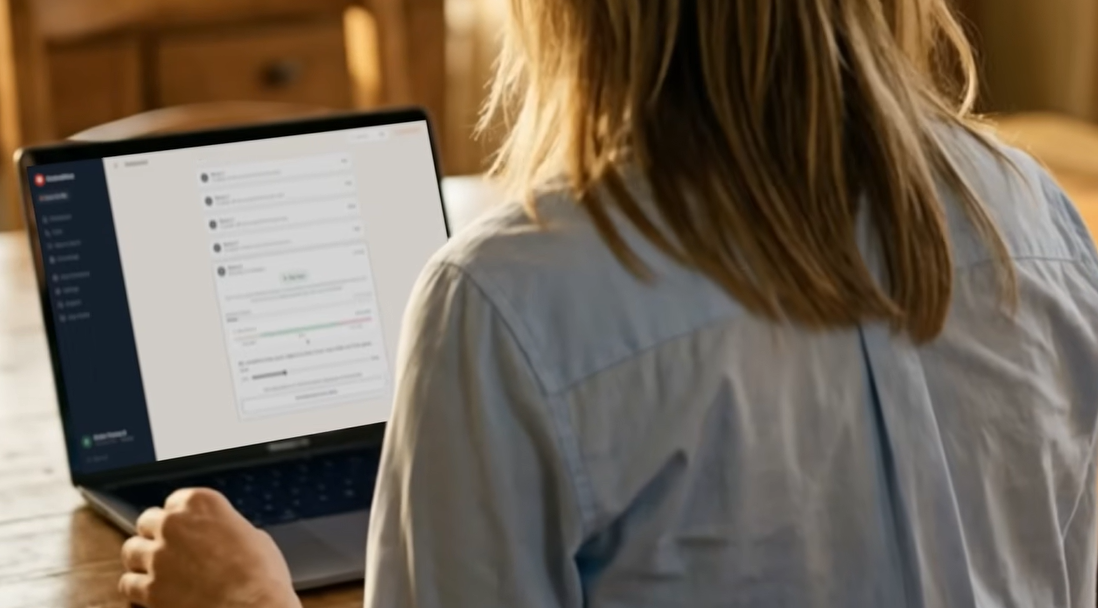
app.kindredmind.care/calls
Dashboard
Call Log
Family
Knowledge Base
Settings
SK
Sarah K.
Caregiver
Call Log
Companion Active
Readiness 94%
Thu, Mar 27   2:14 pm
AI Calm
4m 32s
Asked if you're coming Sunday and whether the kids will be there.
Mentioned the garden looking pretty after the rain. Calm and content.
Follow-up note
She's hoping to hear about Sunday plans. Worth a quick text to confirm.
Wed, Mar 26   11:07 am
AI Content
3m 14s
Talked about breakfast and how she liked the scrambled eggs.
Asked about the grandchildren by name. Ended warmly.
Tue, Mar 25   4:52 pm
AI A bit confused
6m 08s
Asked where dad was several times. Gently redirected each time.
Settled when reminded about bingo tomorrow. Left feeling okay.
Caregiver and parent
"For the one who answers every time."
Start Your First Month

There is more to this story, and it starts with a real family.

Why We Built This

Built on the same principles every dementia care professional is trained to use.

Every conversation KindredMind has follows the same framework taught in memory care training worldwide, because the principles that make a great caregiver also make a great call.

Family Authorized

KindredMind is set up entirely by the people who love them most. You record your voice. You build the knowledge base. You control when it answers. Every voice model requires your explicit recorded consent. You can turn it off completely, anytime, in seconds.

Grounded in Real Dementia Care

Our conversation approach follows the Alzheimer Society of Canada's guidance and draws on validation therapy and person-centred care frameworks. KindredMind never corrects, never argues, never challenges their version of reality.

Privacy Without Compromise

Voice model clips are deleted once your model is ready. Your loved one's voice never enters our systems. Call transcripts are deleted after 90 days. Your family's private conversations never train any AI model, ever.

We would wonder too.

What is the free setup call and do I need it?

Every plan includes a free 30-minute setup call where we walk through everything together. We'll record your voice in a real conversation, which produces a richer, more natural voice model than scripted prompts alone, and we'll build your knowledge base together by asking the right questions about your loved one. Most families leave the call with a fully live account.

You don't have to use it. The self-serve flow has step-by-step guidance the whole way. But families who do the setup call consistently produce better voice models and more detailed knowledge bases, which means better calls from day one.

Book your setup call at any point: before you sign up, right after, or whenever you're ready.

Is KindredMind right for where my loved one is right now?

KindredMind works best when your loved one can still initiate and hold a phone call, which describes most people in mild to moderate stages of dementia or cognitive decline.

The product is built for the pattern where they call frequently, sometimes ten or more times a day, reaching for a familiar voice to settle their anxiety. If that sounds like your situation, KindredMind is likely a strong fit.

If your loved one is in a later stage and no longer uses the phone independently, KindredMind isn't the right tool. We would rather you know that now. The right fit matters more to us than the signup.

Not sure where your loved one is? The free setup call is a good place to find out. We will tell you honestly whether this will work for your family.

Isn't this deceptive, pretending to be someone you're not?

Dementia care has a long-established principle, endorsed by the Alzheimer Society of Canada and every professional care framework, that literal truth is not always the most compassionate truth. Trained memory care professionals are taught never to correct a patient's reality. When someone living with dementia asks where their mother is, the caring response meets them where they are. KindredMind does exactly the same.

Researchers have studied the comfort of a familiar voice in dementia care since the 1990s, what they call simulated presence therapy, examined in a Cochrane systematic review as a recognised non-pharmacological approach to behavioural and psychological symptoms of dementia.

KindredMind is authorised entirely by the people who love them most. You record your voice. You build the knowledge base. You decide when it answers. What your loved one experiences is not a trick. It is care.

Does it actually sound like me, or does it sound like a robot?

This is the question that matters most. KindredMind builds a voice model from your recordings that captures your vocal texture, your rhythm, your warmth, not just your pitch. The twenty minutes of prompts are specifically designed to capture the full range of how you actually talk. Callers who know you well consistently describe it as remarkably natural. And because phone calls naturally compress audio, subtle imperfections that might be noticeable in a studio disappear completely on a call.

What is Living Voice and how does it work?

Living Voice is how KindredMind's voice clone improves automatically, with no effort from you. We start with an Instant Clone from your recordings. It works immediately. Every call KindredMind handles quietly accumulates the audio of your voice. After 30 minutes, we train a Professional Voice Clone, using the natural speech patterns, pauses, and emotion that only come through in real calls. The voice model refines up to 3 times, at 30, 60, and 90 minutes. After the third refinement it locks in permanently.

What if they figure out it isn't really me?

Most people living with dementia don't question the calls, they feel the comfort and warmth of a familiar voice and that's what matters. If they do express uncertainty, KindredMind is designed to respond gently and reassuringly, never to argue or insist. The emotional truth of the voice is what they respond to.

What happens if there is a medical emergency during a call?

KindredMind is built to recognize emergency language immediately, a fall, pain, difficulty breathing. It responds calmly, directing your loved one to press their call button, while simultaneously sending a high-priority notification to your phone. KindredMind stays on the line, speaking calmly, reassuring them that help is coming, until the call ends.

Can I really cancel anytime, or is there a catch?

No catch. No annual contracts. No cancellation fees. Cancel from your account settings and your billing stops at the end of that billing period. Your knowledge base and conversation history can be exported. Your voice model is permanently removed from our voice provider's servers when your account closes.

How does the Care Circle plan work, can multiple siblings share one account?

Up to four caregivers can join a shared care circle, each with their own cloned voice, their own dedicated phone number, and their own dashboard. When your loved one calls the number they know for you, it's your voice that answers. When they call your sister's number, it's her voice. Each of you shows up personally.

What is KindredMind?

KindredMind is an AI-powered voice companionship service for families navigating dementia. It answers calls from a loved one with dementia in the caregiver's cloned voice, using a personalized knowledge base the caregiver builds. Every call follows the Alzheimer Society of Canada's published communication guidelines for dementia and draws on the principles of simulated presence therapy and validation therapy. It is designed for mild to moderate dementia where the person still initiates phone calls independently.

How is KindredMind different from voicemail or a call-blocking app?

Voicemail and call-blocking apps reduce the number of calls that reach the caregiver but do not address the neurological cause of repetitive calling, dementia separation anxiety. When a person with dementia cannot reach a familiar voice, the anxiety that triggered the call remains unresolved and typically escalates. KindredMind directly addresses the cause: every call is answered warmly in the caregiver's voice, the anxiety resolves naturally, and the call ends with comfort. The caregiver receives a summary rather than carrying the guilt of an unanswered call.

What stage of dementia is KindredMind designed for?

KindredMind works best for mild to moderate dementia, where the person still initiates phone calls independently. This is the stage most associated with repetitive calling behaviour driven by dementia separation anxiety. If a loved one is in a later stage and no longer uses the phone independently, KindredMind is not the right tool. The free setup call is a good place to assess whether KindredMind is appropriate for a specific situation.

Is KindredMind available in Canada and the United States?

Yes. KindredMind is available to families across Canada and the United States. It is built in Canada and operates under PIPEDA (Canada's federal privacy law) and equivalent US privacy standards. Plans start at $179 CAD or $129 USD per month.

Can KindredMind speak to my loved one in a language other than English?

Yes. The companion currently supports 11 languages: English, Spanish, French, Portuguese (Brazil and Portugal), Italian, Polish, Ukrainian, Russian, Greek, and Mandarin. Cantonese and Tagalog are available in beta. You select the companion language once in Settings and all calls are handled in that language from that point forward.

This means your loved one is heard in the language they feel most at home in, even if that is not the language you speak at work or in your daily life. The companion speaks in their language. Your caregiver app, your dashboard, and all support from our team remain in English.

Can KindredMind replace a caregiver?

No. KindredMind is designed to handle the calls a caregiver cannot always answer, the in-between moments when they are in a meeting, driving, or sleeping. It does not replace physical presence, human connection, or the caregiver's relationship with their loved one. Most families who use KindredMind continue to call and visit regularly. KindredMind makes those moments more present and less depleted by removing the weight of unanswered calls.

How much does KindredMind cost?

KindredMind plans start at $179 CAD ($129 USD) per month for the Essential plan (200 minutes). The Standard plan is $249 CAD ($179 USD) per month (300 minutes) and includes live call monitoring and monthly insights. The Complete plan is $329 CAD ($239 USD) per month (400 minutes). The Care Circle plan is $449 CAD ($319 USD) per month and supports up to four caregivers, each with their own cloned voice and dedicated phone number. All plans are billed month-to-month with no annual contracts and include a 30-day money-back guarantee and a free 30-minute setup call.

What is Living Voice and how does the voice clone improve over time?

Living Voice is KindredMind's automatic voice improvement system. It starts with an Instant Voice Clone created from a 15-minute recording session, reaching approximately 72 percent accuracy immediately. As real calls accumulate, the model automatically re-trains at 30, 60, and 90 minutes of the caregiver's voice audio, reaching approximately 90 percent accuracy at the 90-minute threshold. No action is required from the caregiver, the improvement happens automatically and is included in every plan at no extra cost.

What happens if KindredMind's servers go down during a call?

Every account includes an Emergency Failsafe that automatically kicks in if our AI or servers ever become unreachable. When that happens, incoming calls are forwarded directly to your real phone number using our carrier-level fallback, before any call is ever missed. The failsafe is active by default for all accounts that have a real number saved, and can be toggled on or off from the dashboard at any time. Your loved one will always reach a real phone, whether it is the AI or you directly.

Simple, honest pricing.

All plans include a dedicated phone number, AI knowledge base, call summaries, and weekly digest. No hidden fees.

Prices shown in Canadian dollars. All billing is processed in CAD.

Essential

For families just getting started

$179 CAD/mo
200 min / month

Most families use 80-120 min/month

Includes
  • Living Voice, your cloned voice
  • Dedicated phone number
  • Personal knowledge base
  • Daily routine awareness
  • Call summaries after every call
  • Weekly family digest
  • Emergency alert system
  • Companion speaks in 11 languages

5% of your subscription goes directly to dementia research

Free 30-min setup call: we build it with you

30-day money-back guarantee

Complete

For families who want everything

$329 CAD/mo
400 min / month

Most families use 80-120 min/month

Everything in Standard, plus
  • Professional voice clone priority
  • Extended knowledge base
  • Dedicated account support
  • Quarterly family review call
  • Overage Protection (max $20/mo overage cap)

5% of your subscription goes directly to dementia research

Free 30-min setup call: we build it with you

30-day money-back guarantee

Care Circle
Family Plan

For siblings and distributed families

$449 CAD/mo
500 min pooled across all members
  • Up to 4 caregivers, each with their own cloned voice
  • Each member gets their own phone number
  • Shared knowledge base, built together
  • Shared call summaries and digests
  • Pooled call minutes across all members
  • Overage Protection (max $20/mo overage cap)
  • Companion speaks in 11 languages

5% of your subscription goes directly to dementia research

Get started

Free 30-min setup call: we build it with you

30-day money-back guarantee

Additional minutes billed at $0.85 CAD/min. Complete and Care Circle plans include overage protection - additional minute charges capped at $20 CAD/month.

Giving back

5% of every subscription goes
directly to dementia research.

You choose where it goes. We donate on your behalf, every month, automatically, for as long as you're a subscriber.

Alzheimer Society of Canada
Alzheimer's Association (US)
Learn about our giving

Every call is reaching for one thing.
You can make sure it always finds it.

30-day money-back guarantee. Free setup call included: we build your knowledge base and voice model together. Cancel anytime.

Start Your First Month

30-day money-back guarantee · Cancel anytime

For Personal Support Workers

You see what families miss between visits.

KindredMind helps families stay connected to their loved ones, and recognizes the PSWs who make that happen. Share it with the families you support and earn ongoing income for every subscription you bring in.

Become an Advocate

Understanding What You're Going Through

Everything we know about dementia caregiving, written for families, not clinicians.

Caregiver Wellbeing

Dementia Caregiver Burnout

What burnout actually feels like in this caregiving role, and why it's different from ordinary exhaustion.

Understanding the Calls

Why They Keep Calling: Dementia Separation Anxiety

The neurological and emotional roots of why your loved one with dementia calls so frequently.

The Research

Simulated Presence Therapy

What the clinical research shows about familiar voices and dementia anxiety, and why it works.

Practical Guide

Managing Dementia Phone Calls

A complete guide to every strategy, what works, what doesn't, and what's sustainable long-term.

Technology & Care

AI and Dementia Care

What AI can and can't do for people with dementia, and how to evaluate the options honestly.

Read all articles in the KindredMind resource library →