When a person with dementia calls, they are not just making a phone call. They are reaching for something familiar. They are trying to anchor themselves against the confusion and fear that lives inside the disease.
Families try many things to manage this: taking the phone away, blocking calls during quiet hours, letting calls go to voicemail, not answering. Every one of those approaches treats the symptom, the call volume. None of them address the cause, the separation anxiety that drives the calls.
KindredMind addresses the cause. It answers every call in your voice, with the warmth and knowledge that only you have, so your loved one always reaches the person they need, so you get relief without stepping away.
KindredMind can also reach out first, with scheduled check-in calls and gentle reminders, in your own voice or the assistant voice.
Here is what KindredMind is all about.
How Setup Works
-
1
One Conversation With Sarah
One conversation covers everything. Sarah walks you through your loved one, their history, their family, their daily routine, the questions they always ask. As you talk, she captures your voice. When you are done, your knowledge base is built and your Initial Voice is ready to preview. About 8 minutes, no script.
This is where you tell KindredMind that they always ask about your children by name. That they worry they are a burden. That they calm down when you mention Sunday dinner. KindredMind uses all of it, every call. Only your voice is ever recorded, never your loved one's.Rather not use your own voice? Choose the assistant voice instead and skip the recording. It is a warm, consistent companion voice that still knows your loved one's world.
-
2
Connect Your Loved One's Phone
KindredMind provisions a dedicated Canadian phone number for your account. Save it in your loved one's phone under your name and contact photo, or ask care facility staff to update their speed dial. Your real number stays private. They dial what looks like you, and KindredMind picks up.
No new hardware. No ported numbers. No disruption to their existing phone. The change is seamless for them, which is exactly the point. -
3
Use It Free for 14 Days
Your companion goes live the moment setup is complete. No credit card. If you do nothing at day 14, it simply stops. If you decide to keep it, you choose a plan then.
Most families know within the first few days. The calls get shorter, calmer, with a clearer close. Day 14 comes around and the answer is usually obvious. -
4
Choose Your Plan, Or Don't
If you decide to keep going, plans start at $129 USD ($179 CAD) a month. Every plan includes your Refined Voice.
Essential: $179 CAD ($129 USD)/month, 300 minutes. Standard: $249 CAD ($179 USD)/month, 450 minutes, includes monthly insights. Complete: $329 CAD ($239 USD)/month, 600 minutes. Care Circle: $449 CAD ($319 USD)/month, 750 minutes pooled, up to four caregivers. Most families use 80 to 120 minutes per month. -
5
Deepen to Your Refined Voice, If You Want
Your Initial Voice keeps working on any plan. Nothing more to record is required. Add more of your voice and it builds into your Refined Voice at thirty minutes total. The difference is real: more natural phrasing, more warmth, fewer moments that sound like a recording.
Each session with Sarah runs about seven minutes. You can schedule them any time from the Voice tab in your dashboard. The companion keeps answering calls throughout, improving with each session you complete. -
+
Reaching Out (Optional)
From your dashboard you can turn on check-in calls or gentle reminders, pick the days, times, and voice, and switch it off any time. It is off until you choose to use it.
Check-in calls go out in your own voice or the assistant voice, on the schedule you set. Reminders can be a short call or a text, for medication, meals, a visit, or anything else on the routine. Your spending guard covers outbound calls the same way it covers inbound ones.
Set it up once.
They always reach you.
It starts with an 8-minute voice session with Sarah, our setup specialist. No scripts, no prompts, just talking. That's enough to hear your Initial Voice free. With a plan, your Refined Voice keeps building until it's fully you, the voice your loved one comes to know.
Set up KindredMind
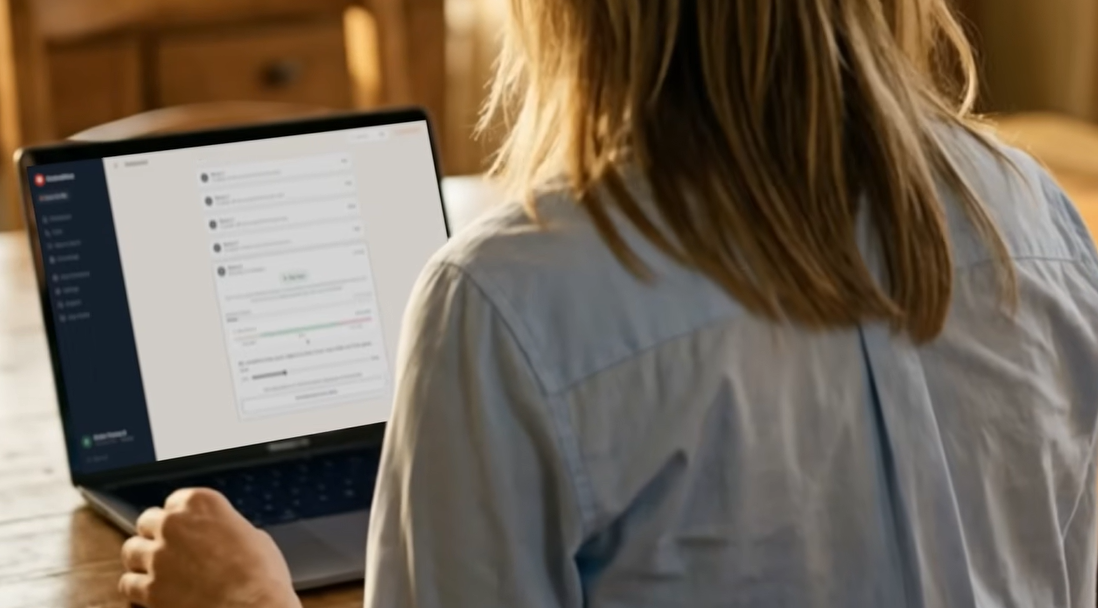
Train your voice and teach KindredMind your loved one's routines, the people they love, the words that calm them. Choose what you share. Privacy first. Hear your Initial Voice free in about 8 minutes. Your Refined Voice is included with every plan.
Choose when KindredMind answers
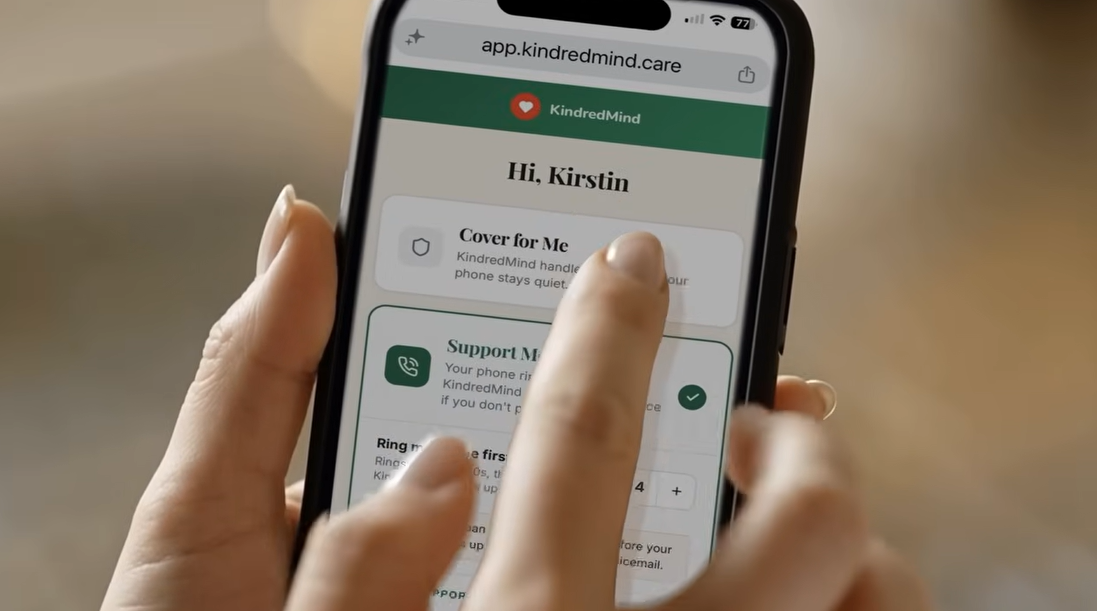
You stay in control. KindredMind picks up the calls you can't, when you're at work, with your kids, or finally asleep.
Be where you are
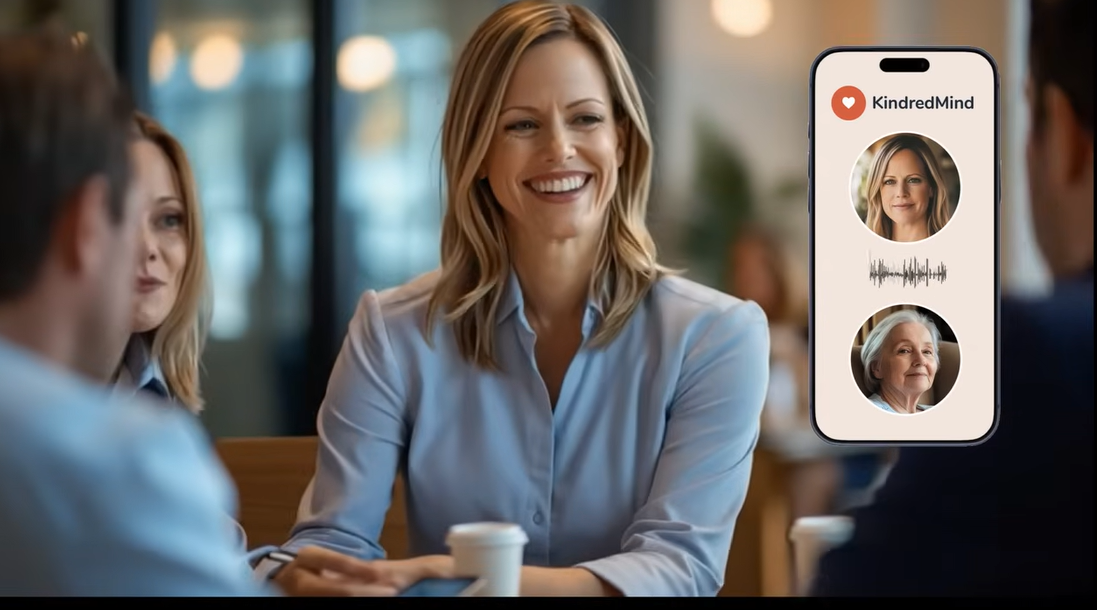
When you're stretched thin, KindredMind answers in your voice. Your loved one gets the one voice that calms them, and you get support that helps you keep showing up.
Choose how they reach you
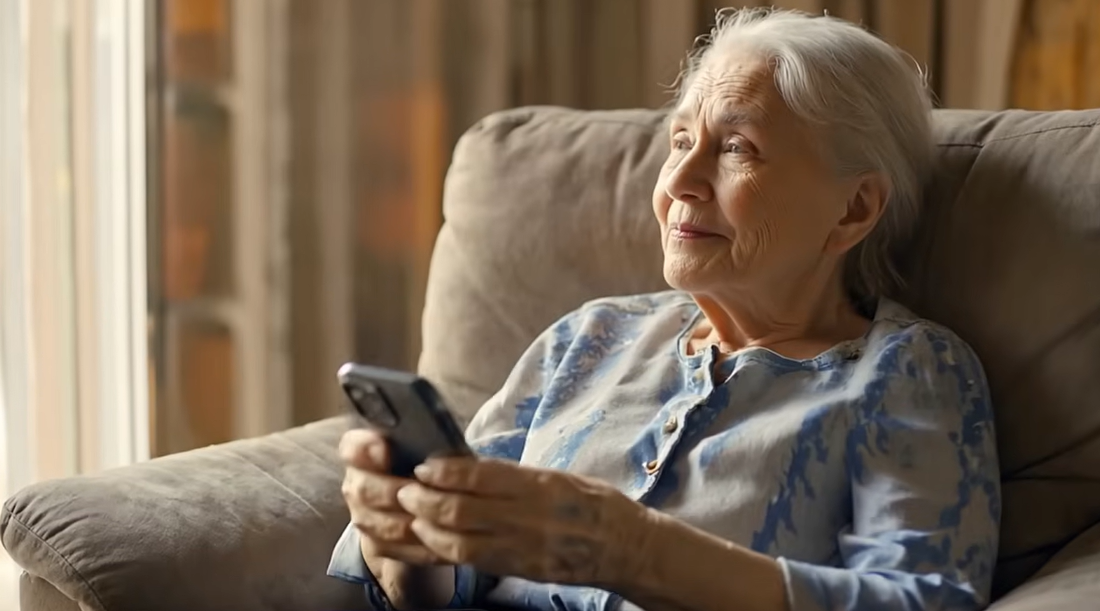
Your loved one reaches your voice in whatever way suits them best. Their own phone, a landline, or a tablet. Same setup either way.
However they're most comfortable,
they reach your voice.
Whichever fits your loved one, the setup is the same. You choose the option below, and they always hear your voice.
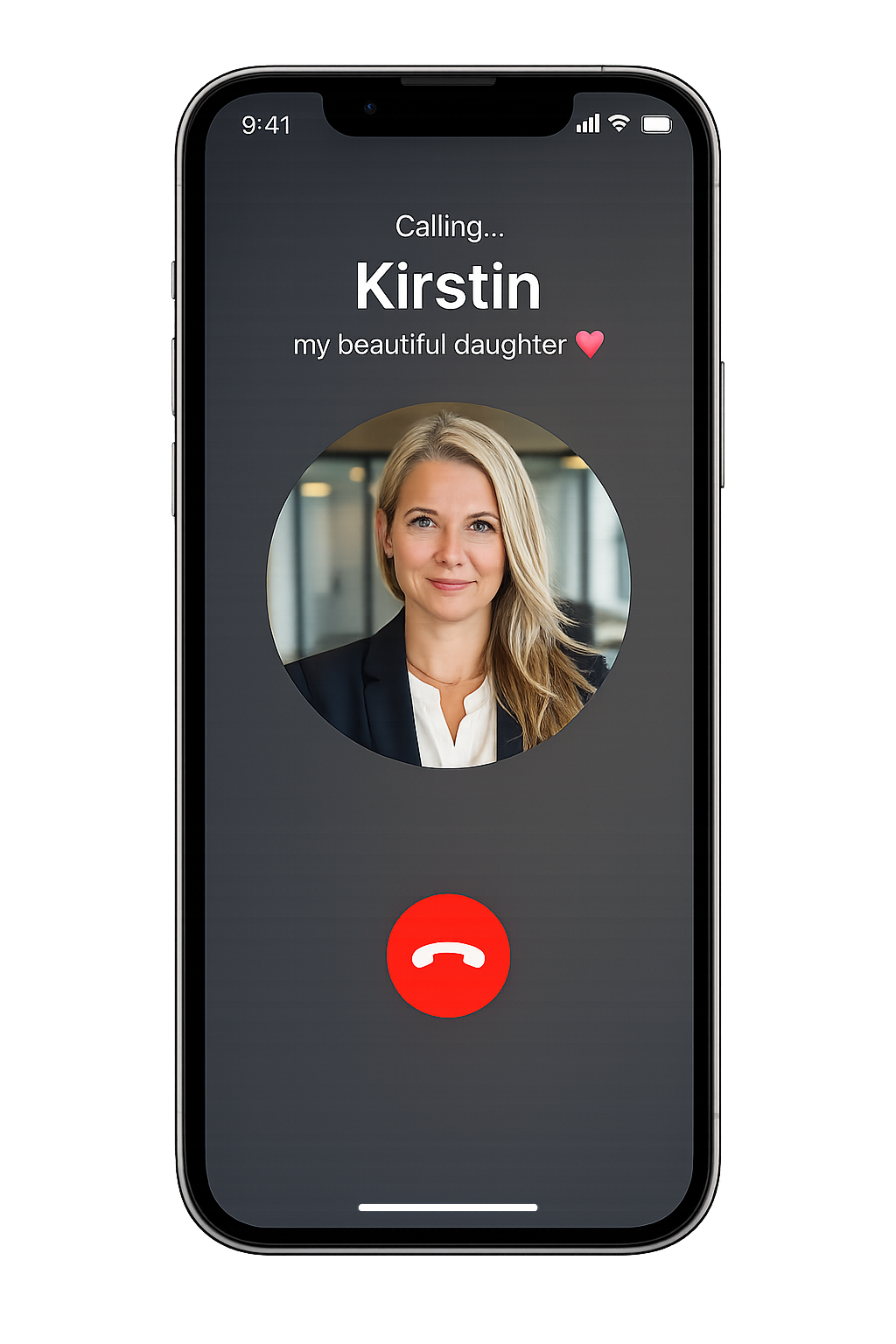
On their own cell phone
We issue a dedicated KindredMind number during setup. Save it in their phone under your name. When they call and you can't pick up, they reach your voice companion instead.
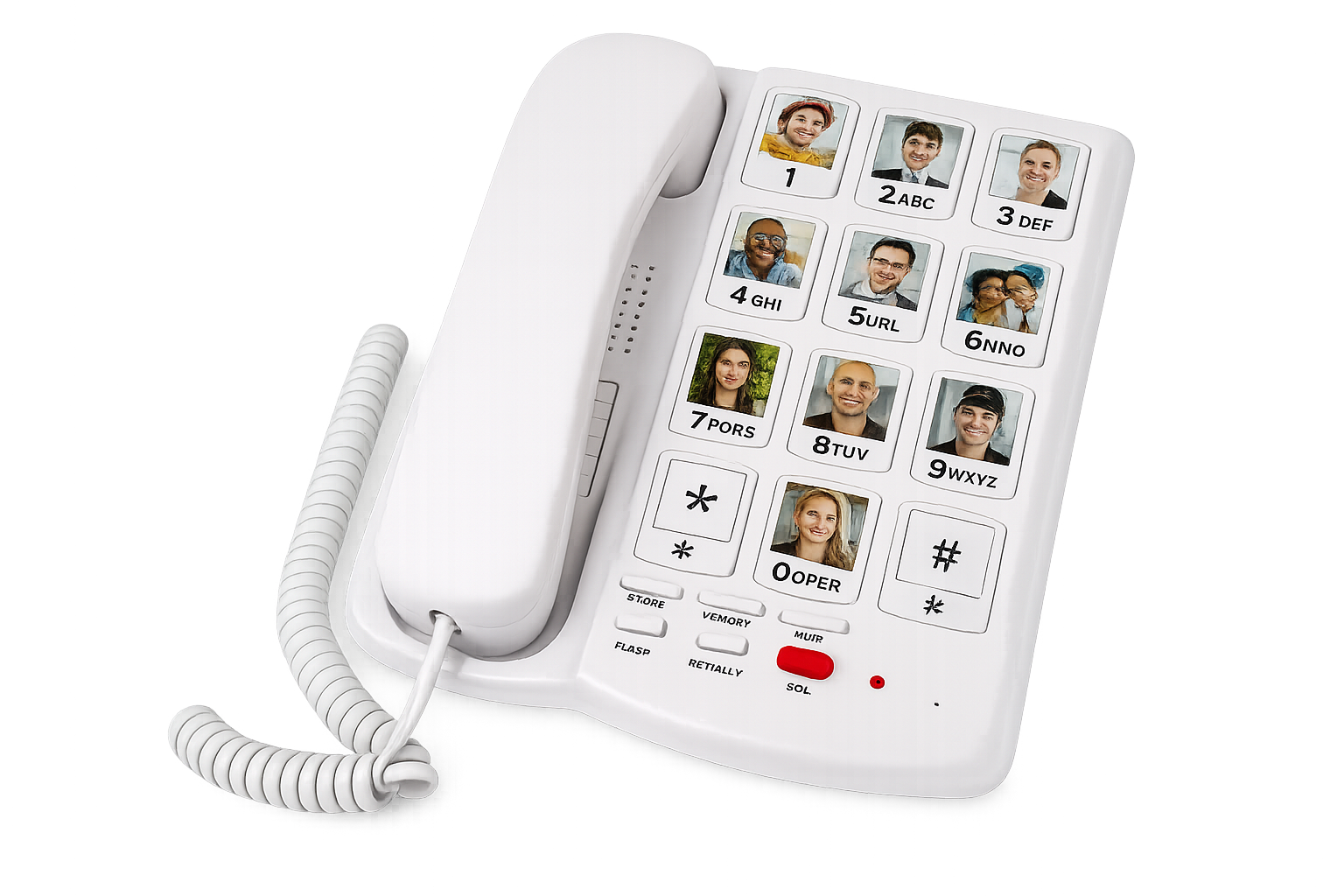
On a landline or big-button phone
Any landline works. All it needs is one memory button programmed with your KindredMind number. They press it, pick up the handset, and hear your voice. No touchscreen. No passwords.
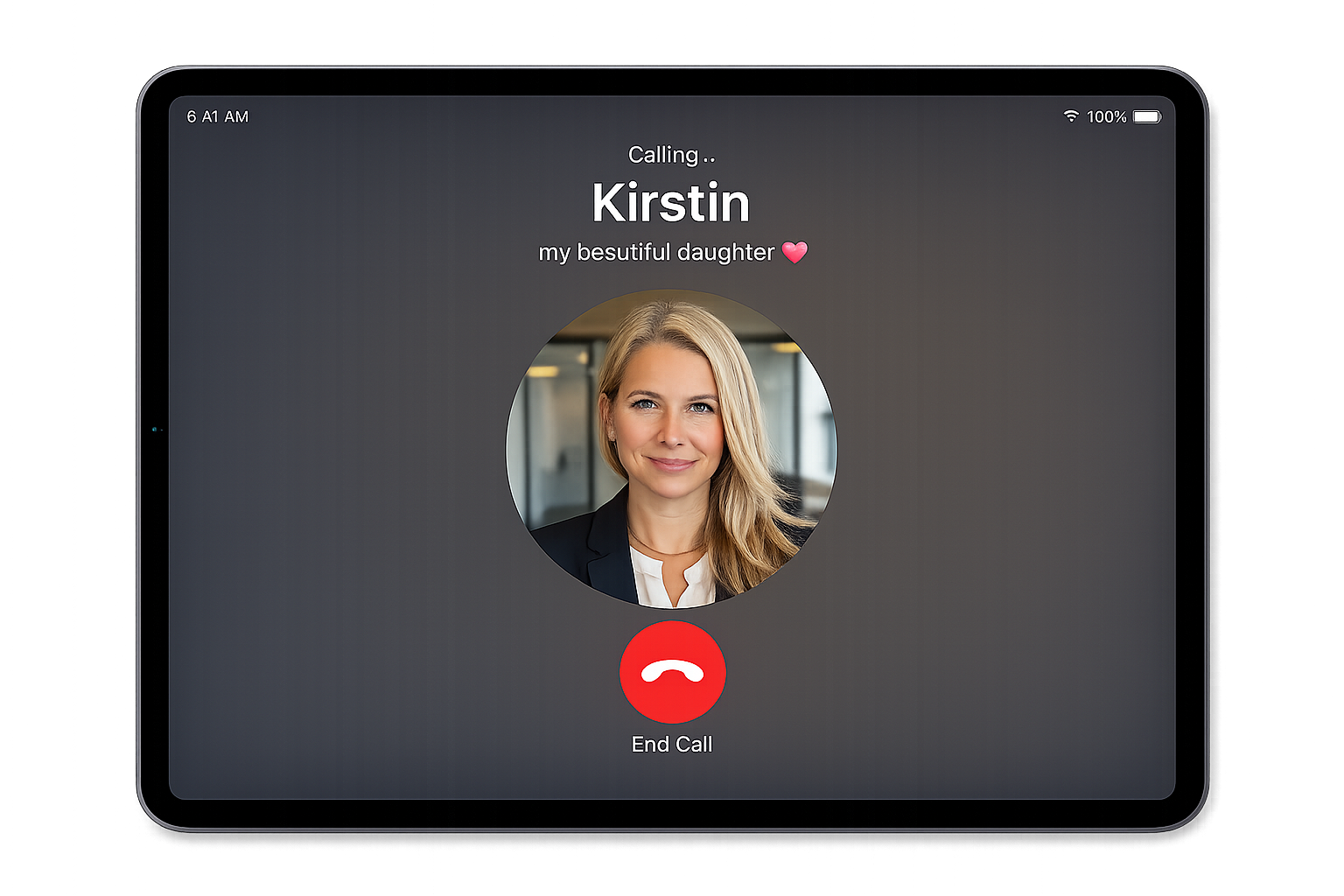
On their tablet
KindredMind opens right from their home screen, like any app. One tap and they're hearing your voice. It installs straight from the browser, no app store needed.
KindredMind does not replace you. It fills the space between your visits and the calls you cannot always reach, so that when you are there, you are fully there.
What Happens During a Call or Check-in
When your loved one dials, KindredMind answers within the first two rings. Your voice says something like: "Hi Mom, it's me. I'm so glad you called." From that moment, KindredMind takes over, but it is not ad-libbing. It is working from everything you told it.
KindredMind is built on established dementia-care communication: validation therapy, gentle redirection, and warmth-first responses, the same framework described in our approach to dementia phone care. It does not argue. It does not correct. It does not say "you already asked me that." It meets your loved one exactly where they are.
If your loved one mentions something distressing, confusion about a death, fear about where they are, acute agitation, KindredMind flags it. You get an alert right away. You decide when to call back.
Calls can now also begin from KindredMind. You can schedule a warm check-in or a gentle reminder about medication, a meal, or an upcoming visit, delivered in your own voice or the assistant voice, on the days and times you choose. The same warmth-first, no-correction approach applies to every outbound call exactly as it does to every call that comes in.
What KindredMind Does Not Do
It helps to be specific about the limits, because the limits matter.
KindredMind is not a replacement for you. It is a buffer. It handles the calls you cannot take, so that when you do show up, in person or on the phone, you are present instead of depleted. Your relationship with your loved one is yours. KindredMind protects the energy you bring to it.
KindredMind does not handle medical emergencies. If your loved one says something that sounds urgent or distressing, KindredMind encourages them to press their call bell or speak to staff, and alerts you. It is not a medical or monitoring device. It does not make promises about calling doctors or arranging care. It redirects warmly and logs the event.
KindredMind does not pretend to be physically present. It speaks as you, on the phone, and operates within the natural limits of a phone call. It will not tell your loved one you are on your way when you are not, or give false timelines about visits. It speaks truthfully about what it can and cannot promise.
For outbound calls, KindredMind will not call at odd hours, will not ring repeatedly if your loved one does not pick up, and will never tell them you are on your way when you are not. Quiet hours are always respected, and reaching out stays off until you choose to turn it on.
Every call is made possible by you: your voice, your knowledge, your decision to set this up on behalf of someone you love. KindredMind operates within a family-authorization framework: the same framework that governs every other care decision made for a person who lives with dementia. We've written in full about the ethics and consent framework behind KindredMind. Read our ethics position →
What to Expect in the First Week
Most families notice a pattern shift within the first three to five days. The first calls after go-live are often longer as your loved one adjusts to the slightly new dynamic. By the end of the week, the calls typically normalize: shorter, calmer, with a clearer close.
Some families are surprised by how quickly their parent accepts the system. Dementia affects short-term memory more than pattern recognition, your loved one may not consciously process how often they called, but they will feel the emotional effect of every answered call. That consistent reassurance accumulates. The anxiety baseline comes down.
Some families find that certain knowledge gaps emerge quickly, questions the system does not yet have a good answer for. The dashboard makes it easy to update the knowledge base between calls. The system gets better the more you tell it.
Frequently Asked Questions
Will my parent know it is not really me?
Most people with dementia do not distinguish between the voice and the real one, especially because KindredMind uses your exact phrasing, references your shared history, and responds with the warmth they associate with you. Some families choose to tell their parent that a "helper" will answer some calls when they are busy. Others do not. This is a personal decision and we respect both approaches.
What if I don't want to use my own voice?
Some people would rather not hear a recording of their own voice, and that's completely understandable. You can choose our assistant voice instead. It knows everything about your loved one, their routines, the people they ask about, the words that calm them. Only the voice is different. Same plans, same price, same 14 days free. And you can switch to your own voice anytime from your dashboard.
What if my parent says something I should know about?
After every call, you receive a post-call summary with key topics and anything flagged as concerning. If distress is detected during the call, elevated agitation, mentions of pain, or repeated cries for help, you get an immediate alert so you can respond right away.
Can I listen to the full call?
Full transcripts are available in your dashboard after every call. Each transcript is encrypted with AES-256 before it is stored, the same standard used by banks and healthcare providers, and automatically deleted after 90 days. You can read exactly what was said, how the conversation progressed, and how it ended. Call recordings are not available, but transcripts capture the full exchange. We never ask for your loved one's full legal name or date of birth, and we do not collect any information from their device or contacts.
What if I want to take the call myself?
Switch to Support Me in the dashboard. In Support Me, calls ring your real number first for the number of rings you choose, with KindredMind picking up only if you do not answer. Set the ring count to 0 if you would rather have KindredMind answer immediately. In Cover for Me, KindredMind handles every call and your phone stays quiet. You are always in control.
How much does it cost?
Essential: $179 CAD ($129 USD)/month, 300 call minutes. Standard: $249 CAD ($179 USD)/month, 450 minutes, includes monthly insights. Complete: $329 CAD ($239 USD)/month, 600 minutes. Care Circle: $449 CAD ($319 USD)/month, 750 minutes pooled, up to four caregivers each with their own voice and dedicated number. Most families use 80 to 120 minutes per month. See full pricing.
Can multiple siblings each have their own voice?
Care Circle is coming soon. It will let up to four caregivers each record their own voice and get their own dedicated number. When your loved one calls the number they know for you, it's your voice that answers. When they call your sister's number, it's her voice. One person holds the subscription; the others join for free using an invite code. See full pricing for details.
Is there a money-back guarantee?
Start free for 14 days, no credit card. If you do nothing at day 14, it simply stops. If you keep it, every paid plan includes a 30-day money-back guarantee: your Refined Voice is guaranteed for 30 days from the date you activate. If KindredMind isn't right for your family in the first 30 days of your paid plan, contact us and we will refund your payment in full, no questions asked. If cost is a barrier, please reach out before you decide it's not possible. We have found ways to support caregivers in genuinely difficult circumstances, and we would rather have that conversation than have you not get the help you need.
What does person-centered care mean?
Person-centered care means starting with the person, not the disease. It is the standard the Alzheimer's Association places at the core of quality dementia care: knowing who someone is, honoring the reality they are living in, and shaping care around their history, their relationships, and what matters to them, rather than a one-size-fits-all routine. It is the idea that a person living with dementia is still, fully, a person.
Is KindredMind person-centered?
Yes, in every part. KindredMind knows your loved one's world and grounds every conversation in it. It meets them in their reality instead of correcting them. It keeps them engaged with real conversation, not alarms. It speaks in your voice, so the relationship stays at the center. And it keeps pace as your loved one changes. It does not replace the people who love them. It carries person-centered care into the hours you cannot be there.
Not sure KindredMind is right for your situation? We've written an honest clinical comparison of every alternative families consider, including taking the phone away, call blocking, voicemail, and medication.
Read: What Families Try Before KindredMind →
Ready to be there, even when you can't be?
Setup takes about 8 minutes to hear your Initial Voice. Then it's yours free for 14 days. No credit card. Your loved one's next call could be the calm one.
Not because you can't be there. So that you always are.
Start SetupFurther Reading
If you want to understand why dementia patients call so often, and what is actually happening in the brain when they do, we have written about it in depth: Why They Keep Calling: Dementia and Separation Anxiety.
For the research behind KindredMind's conversational design, including how validation therapy principles are built into every call, see Our Approach to Dementia Phone Care.
And if you have questions about how we keep your loved one's data private and what safeguards are in place during every call, see How We Protect Them.